13F Coverage
Four Managers Quietly Added Amazon in Q1. Nobody Noticed

Disclosure: I hold a position in AMZN at the time of publication. This isn't personalized investment advice.
Four managers added to Amazon in Q1 2026. No headlines. No press releases.
Just Klarman, Nygren, Ackman, and Tepper all quietly increasing their positions in the same quarter.
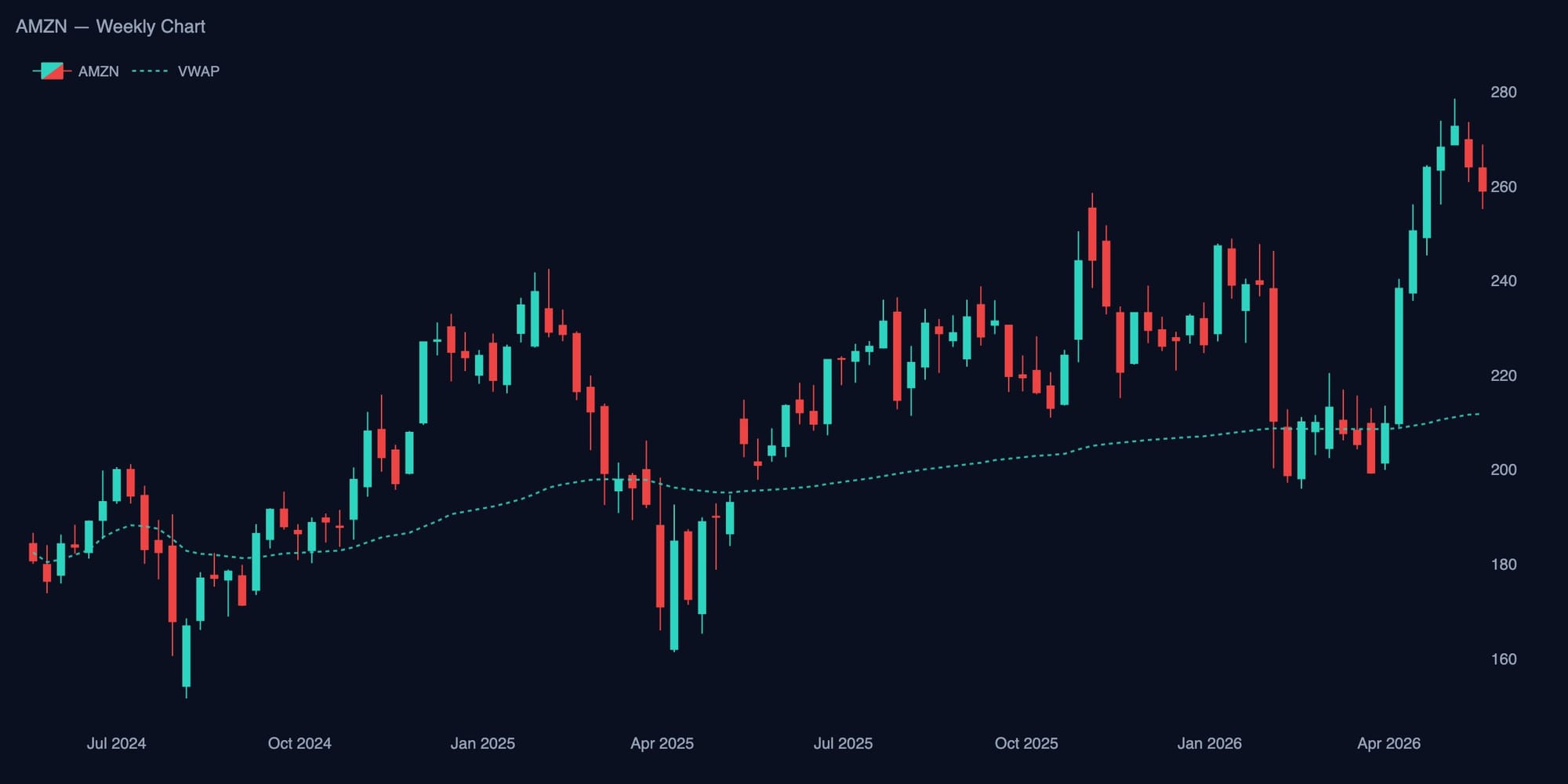
That's two Tier-1 long-duration investors and two Tier-2 opportunistic managers adding to the same name while Amazon traded between its February low of $196 and $250. Nobody coordinated. Nobody announced it.
The 13F filings just show the same conviction playing out across four independent portfolios.
Here's what the positioning looks like and what I think it means.
Tier 1: Long-Duration
Seth Klarman's Baupost increased its Amazon position by 47%, adding 997,363 shares to bring the position to 3.1 million shares.
For context, Baupost runs an extremely concentrated portfolio. Adding nearly a million shares to any position isn't a rounding error.
Klarman doesn't usually show up in the obvious momentum trade. He tends to buy when the market is offering him a price he thinks is wrong relative to normalized earnings power.
That matters here because Amazon isn't a broken small-cap or a deep-value liquidation. It's a $2T+ platform business, and the value case isn't immediately obvious if you only look at the headline stock price.
Bill Nygren's Harris Associates added 297,596 shares, a 6.7% increase that brought the position to 4.76 million shares.
Nygren is also a disciplined value investor. He doesn't chase price strength for the sake of it.
A Q1 add from Harris suggests he still sees Amazon as reasonable relative to earnings power, even after years of multiple expansion and investor enthusiasm around AI infrastructure.
That's the Tier-1 signal: two long-duration managers, both already familiar with the name, both choosing to add during the same quarter.
Tier 2: Opportunistic
Bill Ackman's Pershing Square added 1,844,157 shares, a 19.2% increase that brought the position to 11.45 million shares worth approximately $2.4B.
That's Ackman's largest disclosed position. He's not trimming Amazon to fund something else. He's adding.
That matters because Ackman did the opposite with Alphabet. He cut GOOGL by roughly 95% and rotated into Microsoft instead.
With Amazon, he stayed aggressive. The signal isn't just ownership. It's the decision to make Amazon the largest disclosed position while reducing exposure elsewhere.
David Tepper's Appaloosa nearly doubled its Amazon position, adding 2.14 million shares to reach 4.32 million shares.
That's a 98.2% increase in a single quarter. Tepper moves fast and with conviction when he thinks the setup is right.
A near-doubling isn't a passive rebalance. It's an active call that the February weakness created an opportunity.
Tier 3: Dynamic
Bridgewater increased its Amazon position by 125%, adding 2.44 million shares.
I'm flagging that for context, but excluding it from the consensus count because Bridgewater is systematic rather than discretionary. It doesn't carry the same signal quality as Baupost, Harris, Pershing Square, or Appaloosa.
The counted signal is four discretionary managers: two Tier-1 and two Tier-2.
That's the cleanest version of the Amazon setup. The stock didn't need a new buyer to become interesting. It already had owners, and those owners used the pullback to add.
What the Positioning Actually Tells You
This is the quietest signal in the Q1 2026 data.
No manager opened a new position in Amazon. They all already owned it.
What happened in Q1 is that four of them looked at the February selloff to $196 and decided to add.
That matters because these managers have different frameworks.
Klarman is buying normalized earnings power. Nygren is buying value relative to peers.
Ackman is buying a dominant platform where AWS is still the core asset. Tepper is buying momentum with conviction.
Four different frameworks. Same direction. Same quarter.
That's the part I care about.
A single manager adding can be portfolio maintenance. Two managers adding can be coincidence.
Four managers across two tiers adding in the same quarter starts to look like consensus.
Why Amazon Was Addable in Q1
The stock traded down to $196 in February, and that decline wasn't driven by an Amazon-specific business break.
It was broader market fear. That distinction matters.
When a stock falls because the business is impaired, I need a much bigger margin of safety. When a stock falls because the market is de-risking and the core business still looks intact, the pullback can become an opportunity.
Amazon's Q1 add signal looks like the second category.
The institutional buyers weren't betting on a new product launch or a short-term catalyst. They were adding to a platform they already understood while the market gave them a lower price.
That's different from chasing a breakout.
It also explains why there were no new-position signals. The managers who liked Amazon already owned it.
Q1 wasn't about discovery. It was about conviction.
The Bull Case
The bull case still comes down to AWS, retail operating leverage, and advertising.
AWS is the key piece. If cloud growth re-accelerates above 20% year-over-year, the AI infrastructure thesis gets validated and the market can keep paying a premium multiple.
Retail matters too, but not in the old “growth at any cost” way. The question is whether Amazon can keep expanding margins while still investing heavily in logistics, AI, and infrastructure.
Advertising is the quieter profit engine. It keeps giving Amazon another high-margin lever inside an ecosystem it already controls.
That's why the stock can look expensive on simple headline metrics and still make sense to long-duration investors.
The value isn't only in what Amazon earns today. It's in what the platform can earn if AWS, advertising, and retail margins keep compounding together.
The Bear Case
The bear case is valuation and expectations.
At $259, Amazon is up 32% from the February low. The easy add from the panic has already passed.
If AWS growth decelerates, the multiple compression risk comes back fast. A premium platform can still sell off hard if the market decides the growth engine is slowing.
There's also execution risk. Amazon is still spending aggressively, and AI infrastructure isn't cheap.
If capex rises faster than investors expect, free cash flow can get questioned even if the long-term thesis stays intact.
That's why I'm not treating the Q1 13F signal as a blind buy signal at current prices.
It's confirmation that serious investors used weakness to add. It doesn't mean every price is attractive.
What I'm Watching
Q2 earnings on July 29 are the next real test.
AWS growth rate is the number that matters. If AWS accelerates above 20% year-over-year, the AI infrastructure thesis gets validated and the stock likely pushes toward all-time highs.
If AWS growth slows instead, the setup gets more complicated.
I'm also watching whether Amazon can keep expanding retail margins without starving the investment cycle. That balance matters more now that the stock has already recovered from the February low.
The $196 February low was driven by broader market fear, not Amazon-specific problems. That's why the Q1 adds matter.
The next pullback won't be evaluated the same way. If the business is still intact and AWS is accelerating, weakness is interesting.
If AWS disappoints, the setup changes.
Related reading: The Smart Money Just Moved Into Alphabet: Not Just Buffett and Klarman and Elliott Both Opened NCLH in Q1. The Stock Is Now at 52-Week Lows
Howard is a full-time trader based in New Jersey with 13 years of experience across Forex, crypto, equities, and futures. He started Position Note to document his trades and analysis in public. All positions are disclosed. Nothing here is personalized investment advice.