Market Notes
CPI Hit 3.7% and the 10-Year Fell Anyway, October 2026

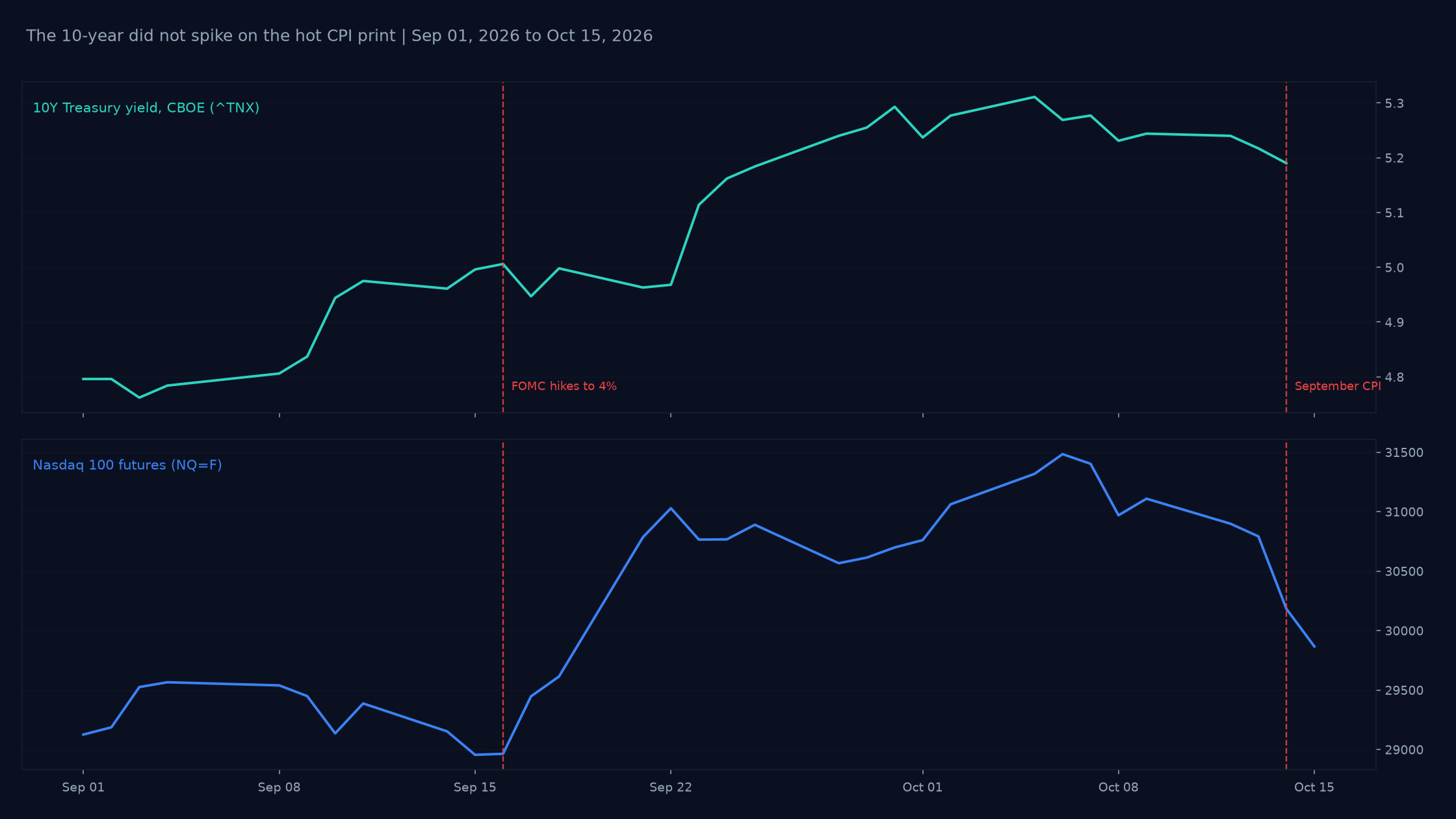
September CPI came in at 3.7% year over year with core at 2.6%, both above forecast, and the first thing the market did was nearly double the odds of an October rate hike. By Thursday morning it had given most of that back. The reason showed up the same afternoon in the Fed's own Beige Book, where 5 of the 12 districts reported firms reducing staff through attrition, delaying hiring, or planning less job creation after investing in AI. My read is that the bond market stopped treating this as an inflation problem the Fed can fix and started treating it as a growth problem, and that's why the 10-year closed lower on the hottest print of the quarter.
What the Data Shows
The inflation is real and it's mostly energy. BLS reported on October 14 that September CPI rose 0.6% for the month, with gasoline up 9.1% and accounting for over half of the all-items increase, and shelter up 0.4%. Core rose 0.3% for the month and 2.6% year over year, against the 2.5% economists expected. Workers didn't keep up; real average hourly earnings were down 0.7% over the 12 months through September, per the BLS real earnings release that same morning.
Then the Beige Book landed at 2pm ET and complicated it. 3 districts called overall price growth "robust" and 8 called it moderate, with 3 of those 8 saying input price pressures were intensifying, and higher oil prices showed up in all 12 district reports as firms passed fuel surcharges through the supply chain. That's second round inflation, which is exactly what the Fed hikes against. The same report also said consumer-facing firms are seeing tighter margins because price-sensitive customers keep resisting price hikes, and that 5 districts had firms cutting staffing through attrition, delaying hiring, or expecting less job creation after AI productivity investments.
The rates market split the difference, fast. CME FedWatch put an October hike at 22.1% before the CPI release and 41.5% by 12:20pm ET on October 14; Kalshi ran to 33% after the print and was back at 27% by early Thursday, with Polymarket at 24%. Treasuries said the same thing from the other end: the 10-year minus 2-year spread narrowed from 0.42% on October 13 to 0.37% on October 14 per FRED, and the CBOE 10-year yield closed at 5.19% on October 14, down from 5.22% the day before. Hottest inflation print of the quarter and the long end rallied.
Why It Matters for Your Portfolio
This is the setup where front-end rate risk and long-end rate risk stop moving together, and that changes how you price anything levered. Nasdaq 100 futures have dropped 3.35% since the October 12 close to 29,862 as of October 15 while S&P 500 futures are down 1.36% to 7,751.25, which is what it looks like when the market reprices growth and debt service instead of inflation. The companies that have to roll debt at 5% get hit first and the ones sitting on cash get hit last, and that split doesn't care much what core CPI did.
What I'm Watching
2 dates do the work here. The FOMC meets October 27 and 28, and the next CPI report, for October, isn't out until November 10, so the Fed decides this one without another inflation print in hand. If hike odds are still in the 20s going into that meeting while the 10-year sits under 5.25%, the market has committed to the growth read and I'd expect the curve to keep flattening from 0.37%. The thing that would change my mind is the next jobs report; if the Beige Book's AI hiring line shows up as an actual rise in unemployment, the question stops being how many more hikes and starts being how fast they get undone. I'm watching that, not calling it.
Related Reading: The Market Is Not Buying the Fed Pivot Yet. Here's Why and The 30-Year Hit 5.31% and Treasury Stepped In, August 2026
Howard is a full-time trader based in New Jersey with 13 years of experience across Forex, crypto, equities, and futures. He started Position Note to document his trades and analysis in public. All positions are disclosed. Nothing here is personalized investment advice.