13F Coverage
Hedge Funds Moved the AI Trade Down the Stack in Q2 2026

The Q2 13Fs told one clear story about the AI trade: the hedge funds didn't sell it, they moved down the stack. $NVDA got exited by Third Point and trimmed across the aggregate filings, while Taiwan Semi showed up in 9 of the 24 portfolios I track, David Tepper parked almost 25% of Appaloosa in Micron and Taiwan Semi, and 4 different funds opened brand new AMD positions in the same quarter. The chip supply chain is where the positioning went. Filings show holdings as of June 30, and the market has already stress-tested them: most of these names are down 20% to 34% since. Here's the map and what I'd do with it.
Same ground rules as always: 13Fs don't show entry prices, so "held as of June 30" is all we know. I sort my 24 tracked funds into three tiers, patient value money, opportunistic funds, and fast growth money, and I care most when different tiers agree.
Down the Stack, Name by Name
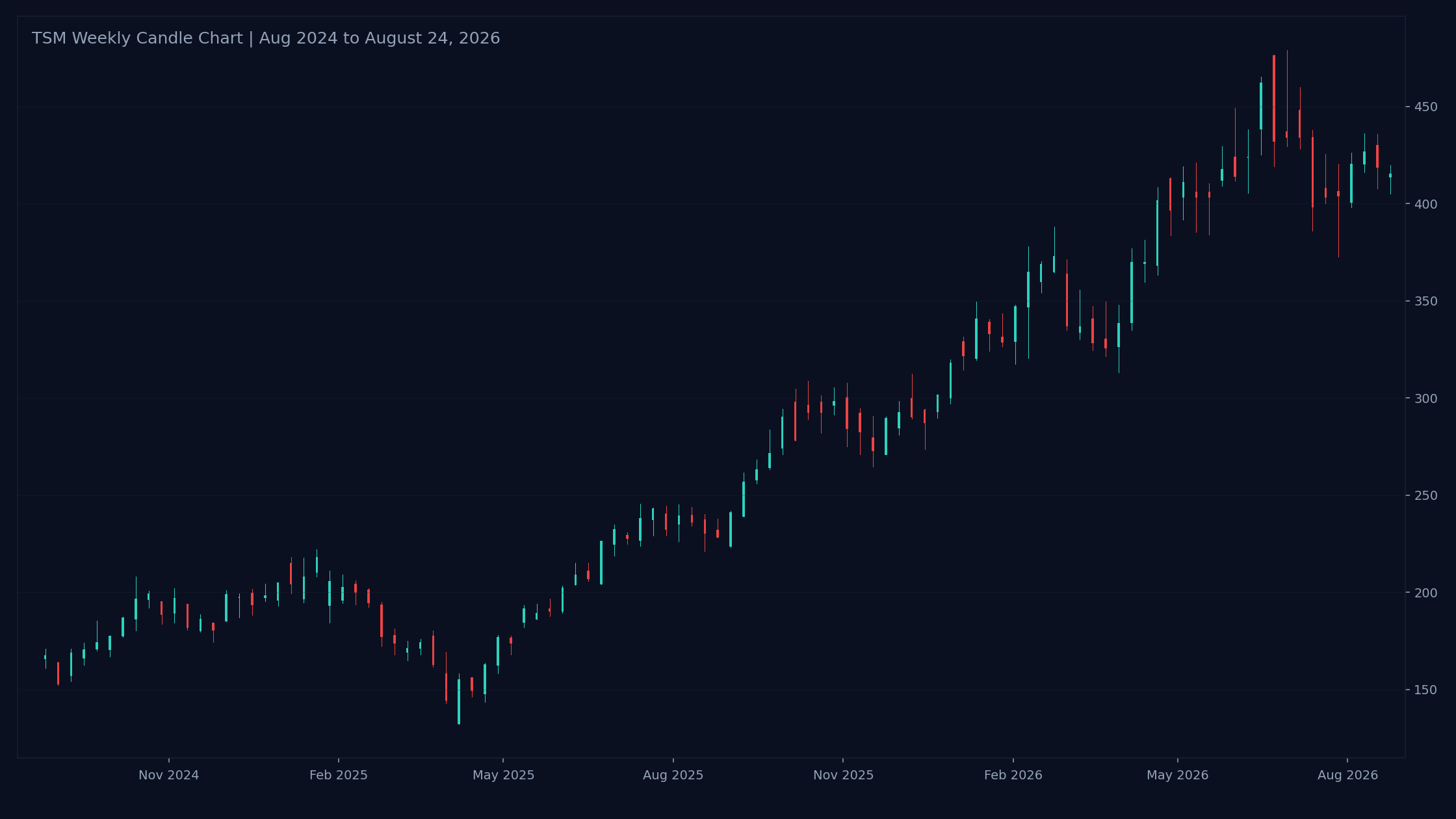
Start with the foundry. $TSM is held by 9 of my 24 funds and the holder list spans all three tiers: Fundsmith at 4% of its book, Tepper's Appaloosa at 10.2%, Coatue at 8.8%, Tiger Global at 9.7%. When the patient money and the fast money both size a position that large, that's the strongest kind of agreement these filings produce. Taiwan Semi makes the chips for everyone, so owning it is basically owning the whole AI buildout without picking the winner.
One step down, memory. Tepper's Micron stake alone is 14.6% of Appaloosa, and stacked with his Taiwan Semi position, nearly a quarter of his fund sits in two chip names. Lone Pine and Tiger Global both opened new Seagate positions the same quarter, a bet that AI data centers need storage as much as they need compute.
Then the equipment layer, the companies that sell the machines that make the chips. Lam Research, Applied Materials, and ASML each appear in 5 of my 24 portfolios, with Coatue holding all three at once. And at the design layer, 4 funds opened brand new $AMD positions in Q2: Harris Associates, Coatue, Duquesne, and Tiger Global. Four independent funds starting fresh stakes in the same name in the same quarter is my coordinated-entry signal, and it's rare.
What They Sold Tells the Same Story
The other half of the rotation is what got sold to fund all this. Third Point exited Nvidia, Broadcom, and Meta entirely, then multiplied its Alphabet stake, a clean trade of chip sellers for a chip buyer. Duquesne dumped Broadcom too. Tepper trimmed his Micron position during the quarter and zeroed out a $400 million SanDisk stake, taking profits on memory even while memory stayed his biggest sector bet. Aggregate 13F data showed institutions reducing Nvidia and Broadcom while adding to Alphabet and the supply chain.
Read together, the flows say the funds stopped paying up for the one obvious name and spread the same thesis across the layers underneath, where the multiples were lower and the stories less crowded. Not one fund on my board abandoned the AI trade. They repriced their way of expressing it.
Then the Market Repriced Everything
Here's what makes this quarter's filings unusually useful: the stocks have already been hit since the funds' June 30 snapshot. As of August 25, Micron is down 24% from its late-June high of $1,213, Applied Materials is down 34%, Lam Research is down 28%, AMD is down 18%, and Taiwan Semi is down 13%. Nvidia reported earnings August 26, and the memory complex sold off hard into that print, with Samsung and Micron both down sharply the week before on cycle-timing worries.
So the down-the-stack trade is available 20% to 30% cheaper than the funds' quarter-end marks. That cuts both ways. Either the funds were early and the pullback is the entry they didn't get, or the sell-off is the market telling them the chip cycle is rolling over, and memory cycles roll over hard when they roll. The honest answer is nobody knows yet, which is why the next section matters more than the map.
What I'm Watching
I don't own any of these names right now, and after a 20% to 30% pullback I'm watching three things before that changes. First, whether $TSM holds above its own 200-day area around the high $300s, because the broadest-owned name in the complex should be the last one standing if the thesis is intact. Second, memory pricing: Micron's next earnings will say whether the August selloff was cycle timing or cycle end, and those are completely different trades. Third, the equipment orders: Lam and Applied Materials guide off fab capex plans, and if Taiwan Semi and the hyperscalers hold their capex numbers, the equipment names are the most oversold layer of the stack. Which name I'd buy first, and where, is below for members.
Related Reading: The AI Bubble's Early Tripwires Are Already Flashing and The S&P 500's Top 10 Is 37% and Mostly One Trade in 2026
Disclosure: I hold no position in $TSM, $MU, $AMD, $NVDA, or the equipment names discussed. I hold positions in $AMZN, $META, and $MSFT, mentioned as portfolio context, per my portfolio as of August 7, 2026.
Disclaimer: This is not personalized investment advice. I'm sharing my own research process and portfolio thinking. Do your own work before making any investment decision.
Howard is a full-time trader based in New Jersey with 13 years of experience across Forex, crypto, equities, and futures. He started Position Note to document his trades and analysis in public. All positions are disclosed. Nothing here is personalized investment advice.
Members Only: How I Am Managing the Watch
- Which of the four layers I'd buy first and why it's not the obvious one
- The exact price zone where I'd start the position
- The one data point that kills the whole down-the-stack thesis for me
- How I'm playing Nvidia earnings fallout across the complex